Author Archives

Peggy Mason
Peggy Mason grew up in the Washington DC area and worked in taxidermy at the Smithsonian Museum of Natural History during middle and high school. She received her BA in Biology in 1983 and her PhD in Neuroscience in 1987, both from Harvard. After postdoctoral work at the University of California - San Francisco, she joined the faculty at the University of Chicago in 1992. Dr Mason is now Professor of Neurobiology. For more than 20 years, Dr Mason's research was focused on the cellular mechanisms of pain modulation. In the last ten plus years, Dr Mason has turned her energies to the biology of empathy and helping behavior in rats.
Dr Mason taught medical students for 25 years and wrote a textbook for medical students, now in its second edition (Medical Neurobiology, Oxford University Press, 2nd edition, 2017). Dr Mason started the Neuroscience major at UChicago and was awarded the Quantrell Award, the nation’s oldest prize for undergraduate teaching, in 2018. More broadly, Dr Mason is a neuroevangelist, interested in teaching neurobiology to anyone that will listen. To that end, Dr Mason publishes a blog at https://thebrainissocool.com/ and has offered a massively open online course, Understanding the Brain: The Neurobiology of Everyday Life through Coursera (https://www.coursera.org/course/neurobio) since 2014 with a cumulative enrollment of more than 270,000.

I am working in earnest on the 2nd edition of my textbook entitled Medical Neurobiology (Oxford University Press, 2011). I have taught from this book to Pritzker medical students four times (2011-14). While teaching medical students is most directly relevant to a textbook that specifically targets medical students, I also learned so much from teaching undergraduates in University of Chicago’s Study Abroad […]
Read More →

The idea of regeneration and de novo cell production captures the interest of many in the public. I am not entirely clear on the reasons that people find regeneration so alluring. But I venture to say that regeneration may be an attractive idea because it offers 1) the hope of reversing ill health and 2) a biological approach to immortality, typically the exclusive domain of […]
Read More →

I have been a visitor in the incomparable city of Paris in the great country of France for almost three weeks now. Less than two weeks ago, Paris and France suffered a great injury, an egregious insult. Nearly twenty people were killed. Their lives ended brutally, undeservedly, and un-naturally. I am a foreigner here and likely not attune to the subtleties of Parisian emotional […]
Read More →

Let’s talk about our memory experiment. There were many features of memory that were of interest when I designed this experiment and I will touch on all of them. But this is a long, actually very long post. So, I will start with the points that I think are the most interesting. The most interesting of all is that, when push comes to shove, we preferentially […]
Read More →

A friend sent me a link to this video in which one tortoise rights another tortoise that is on its back. Watching this video, I sensed that the helping tortoise really wanted to help the upside down tortoise. I was rooting for the helping tortoise to succeed and wholly relieved when s/he successfully rolled the other tortoise onto its feet. I say “s/he” […]
Read More →

Peeling off brain bark In this edition of Lab Videos, we look at horizontal cuts through the human brain. By slicing through the brain, we are able to see all the interesting territory that is normally hidden by the bark or cortex (yes, the word cortex derives from the Latin word for bark; and I am referring to the tree […]
Read More →
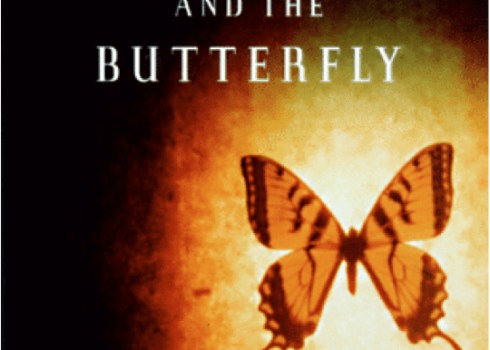
When I first heard the story of Jean-Dominique Bauby, I was instantly captivated. An accomplished and cosmopolitan editor of a French fashion magazine struck down by a pontine stroke blinks out a memoir which is published only 2 days before his death. I was struck by the dichotomy of Bauby’s profound loss accompanied in the most unlikely fashion by unparalleled […]
Read More →

Head Games is a powerful film that lays out the history of head trauma, concussions and the NFL within the context of other organized and professional sports. Watching the film, I was struck by the rapid progress in awareness and knowledge that has been made since 2006. Prior to 2006, dementia pugilistica was the term used to refer to what […]
Read More →

I just finished reading an astounding book, The Unresponsive Bystander: Why Doesn’t He Help? by Bibb Latané and John M Darley (Prentice-Hall, Inc, 1970). Latané and Darley set out to understand what makes the modern bystander so apparently apathetic and callous, watching but not helping as others are hurt, maimed and even die. They ask whether urbanization has created such […]
Read More →

I just started my annual teaching of Medical Neurobiology to University of Chicago Pritzker medical students. In the first day-overview, I wanted to drive home the point that body and brain work together to produce emotion and affect. Pointing to the picture above, I said, “Clearly, my nephew cannot be depressed in this moment; nor is he likely to solve […]
Read More →


 The brain is sooooo cool!