Can you read this?

I am hoping that you play my game and try to read the text above. Go ahead and try before you read the answer below. How’d you do? I am betting that you did just fine. Maybe you had some problems with neocortex, or maybe not. Here is the un-substituted text: How did you read the scramble? Are you aware of how you […]

Read More →

We help because it feels good

A friend sent me a link to this video in which one tortoise rights another tortoise that is on its back. Watching this video, I sensed that the helping tortoise really wanted to help the upside down tortoise. I was rooting for the helping tortoise to succeed and wholly relieved when s/he successfully rolled the other tortoise onto its feet. I say “s/he” […]

Read More →

Exploring the bystander effect

I just finished reading an astounding book, The Unresponsive Bystander: Why Doesn’t He Help? by Bibb Latané and John M Darley (Prentice-Hall, Inc, 1970). Latané and Darley set out to understand what makes the modern bystander so apparently apathetic and callous, watching but not helping as others are hurt, maimed and even die. They ask whether urbanization has created such […]

Read More →

Depressed? Try sky-diving!!

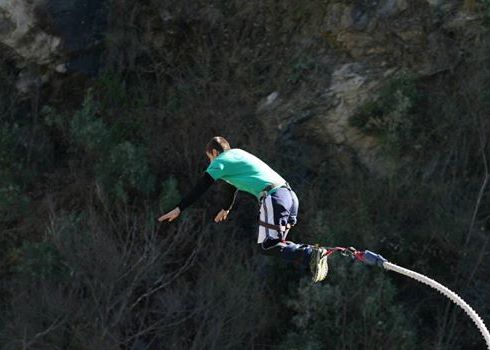
I just started my annual teaching of Medical Neurobiology to University of Chicago Pritzker medical students. In the first day-overview, I wanted to drive home the point that body and brain work together to produce emotion and affect. Pointing to the picture above, I said, “Clearly, my nephew cannot be depressed in this moment; nor is he likely to solve […]

Read More →

Empathic rats… and TV

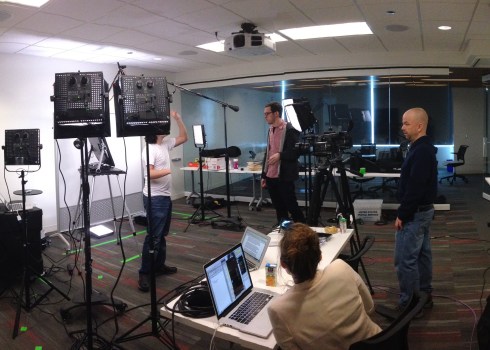
Last week, out of the blue, I received the above video from Oxford Scientific Films. Well, maybe not entirely out of the blue but certainly long after I’d given the footage any thought. Let me explain. In spring of 2013, a producer from Oxford Scientific Films contacted me about filming our empathic rats for use in a documentary to be aired on BBC. I have a great deal of respect for BBC and despite the fact that rats are reluctant “movie stars,” I agreed. I knew that the production would be well done and I wanted our rats to gain the exposure that a BBC show could afford them. So on Sunday, July 7th, 2013, I met a crew at my laboratory. Filming went well. Victoria Huang and Amisha Gandhi, two University of Chicago undergraduates in my laboratory, had patiently worked with the rats. The rats were so mellow that they were completely non-plussed by the cameras and strangers. They were stars as you can see for yourself. The day was long but quite enjoyable. And we were even able to crowd together and listen to Andy Murray win Wimbledon. Our British visitors were happy and proud. The show was designed to highlight relationships between individuals from different species. Our work was included because the empathic feeling that links two rats is likely to be related to the feeling that connects two from different species. Originally, we heard that the show […]

Read More →