Author Archives

Peggy Mason
Peggy Mason grew up in the Washington DC area and worked in taxidermy at the Smithsonian Museum of Natural History during middle and high school. She received her BA in Biology in 1983 and her PhD in Neuroscience in 1987, both from Harvard. After postdoctoral work at the University of California - San Francisco, she joined the faculty at the University of Chicago in 1992. Dr Mason is now Professor of Neurobiology. For more than 20 years, Dr Mason's research was focused on the cellular mechanisms of pain modulation. In the last ten plus years, Dr Mason has turned her energies to the biology of empathy and helping behavior in rats.
Dr Mason taught medical students for 25 years and wrote a textbook for medical students, now in its second edition (Medical Neurobiology, Oxford University Press, 2nd edition, 2017). Dr Mason started the Neuroscience major at UChicago and was awarded the Quantrell Award, the nation’s oldest prize for undergraduate teaching, in 2018. More broadly, Dr Mason is a neuroevangelist, interested in teaching neurobiology to anyone that will listen. To that end, Dr Mason publishes a blog at https://thebrainissocool.com/ and has offered a massively open online course, Understanding the Brain: The Neurobiology of Everyday Life through Coursera (https://www.coursera.org/course/neurobio) since 2014 with a cumulative enrollment of more than 270,000.

This year I was honored that the University of Chicago Dean of the College Melina Hale asked me to give the annual Aims of Education address to the incoming students. I immediately accepted and the following is the speech that I wrote out for the occasion. It nearly matches the speech that I gave which is available online. [Note that […]
Read More →

Speaking at the Latke-Hamentasch Debate (LHD) is equal parts honor and duty for Jewish faculty at the University of Chicago. So, when asked to speak at the 77th LHD, I said Yes. Then I faced a big problem. Plain and simple, I would not, could not get up in front of a mostly Jewish audience and not mention the hostages. […]
Read More →

I was being interviewed this morning when the interviewer asked how the work we were talking about related to “Frans de Waal who just passed away.” I had not heard. I immediately choked up and remain teary, twenty minutes since receiving the news. Frans’s death is an enormous loss to me and for the world. Emory University, Frans’s academic home […]
Read More →
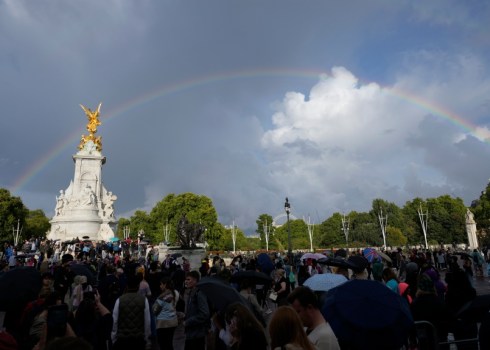
magine life without expressing your views. Your country joins the EU. Your country exits the EU. Your children severely, potentially criminally, misbehave and do so publicly. You meet myriad governmental heads, some of whom intrigue you, others who leave you indifferent, and inevitably some who you abhor. And now imagine that you say and show nothing of your feelings....
Read More →

Packing these Petoskey stones, fossilized coral, which have been polished by my cousin, into a small suitcase gave me the opportunity to live out the size-weight illusion.
Read More →

I am so happy to announce that my mother, Jane Sommer Mason, is having her first art opening at the tender age of 93. Four of her eight busts of Watergate figures are currently on display at the George Washington University’s Luther W. Brady Art Gallery. On Wednesday (November 10, 2021), a virtual opening will feature Jane Mason, Washington Post […]
Read More →

In response to a student request for an overview of neuroanatomy, I happily recorded an hour of dissections designed to provide a neuroanatomical framework. I start with development and proceed to dissections of sheep and human brains to illustrate the parts of the brain and how they fit into the cranium.
Read More →
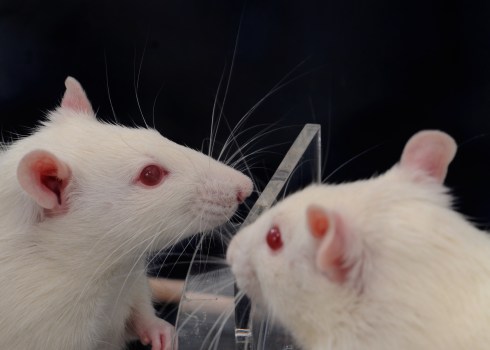
Human exceptionalism incurs another blow. In work published today in Science Advances, my laboratory demonstrates the Bystander Effect in rats: rats are less likely to help in the presence of rats who are not helping – confederate rats or as my students love to say, confederats. On the other hand, in the presence of naive rats, who could potentially help, […]
Read More →
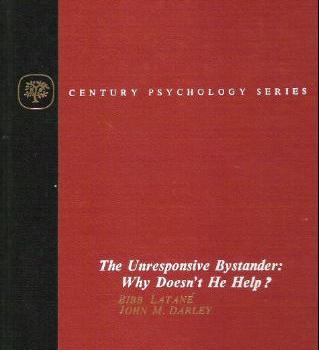
The Bystander Effect, included in every introductory psychology textbook and course, refers to the consistent finding that individuals are less likely to help in the presence of others than when they are alone. The more bystanders present, the less likely an individual is to help. This is commonly attributed to a diffusion of responsibility, meaning that an individual in a […]
Read More →
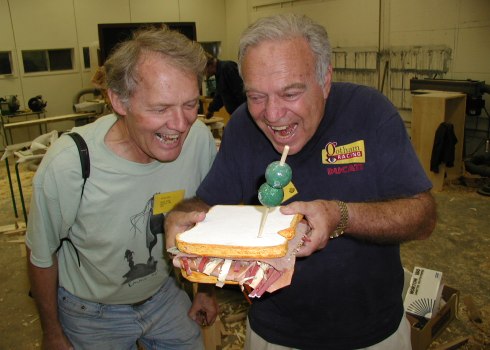
Arthur K Mason, Washington attorney, turned-wood collector, and lately a memoirist, died at home at the age of 93. He was among the youngest 10% of those who served in World War II, and one of less than 3% of WWII veterans who survived to 2019. Arthur’s health turned sharply worse around the holidays, and he was airlifted off Upper […]
Read More →


 The brain is sooooo cool!