Author Archives

Peggy Mason
Peggy Mason grew up in the Washington DC area and worked in taxidermy at the Smithsonian Museum of Natural History during middle and high school. She received her BA in Biology in 1983 and her PhD in Neuroscience in 1987, both from Harvard. After postdoctoral work at the University of California - San Francisco, she joined the faculty at the University of Chicago in 1992. Dr Mason is now Professor of Neurobiology. For more than 20 years, Dr Mason's research was focused on the cellular mechanisms of pain modulation. In the last ten plus years, Dr Mason has turned her energies to the biology of empathy and helping behavior in rats.
Dr Mason taught medical students for 25 years and wrote a textbook for medical students, now in its second edition (Medical Neurobiology, Oxford University Press, 2nd edition, 2017). Dr Mason started the Neuroscience major at UChicago and was awarded the Quantrell Award, the nation’s oldest prize for undergraduate teaching, in 2018. More broadly, Dr Mason is a neuroevangelist, interested in teaching neurobiology to anyone that will listen. To that end, Dr Mason publishes a blog at https://thebrainissocool.com/ and has offered a massively open online course, Understanding the Brain: The Neurobiology of Everyday Life through Coursera (https://www.coursera.org/course/neurobio) since 2014 with a cumulative enrollment of more than 270,000.

I just came back from The Beautiful Brain: The Drawings of Santiago Ramón y Cajal exhibit at NYU’s Grey Gallery. For those who don’t know, Ramon y Cajal (or Cajal as he is commonly referred to) was the father of neuroanatomy. He shared the Nobel Prize with Camillo Golgi in 1906 for using Golgi’s staining method to show that neurons were […]
Read More →
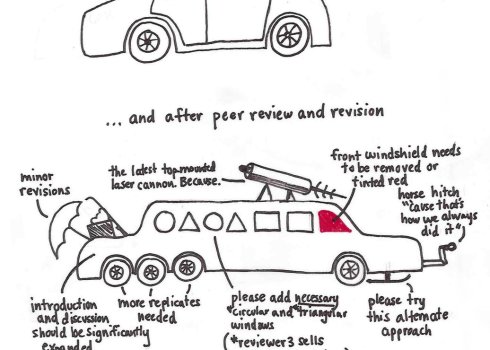
Let's crowd-source peer review and get scientific publishing out of the horse and buggy days!
Read More →
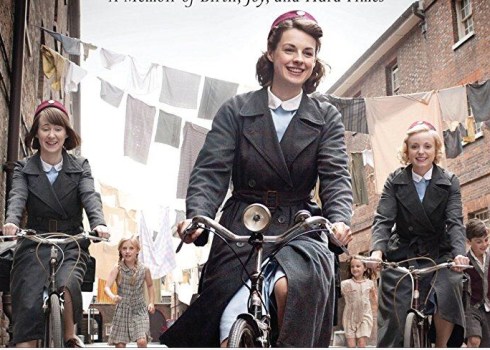
Well the easy answer is no, not in any significant numbers. But the point of this post is to tell the improbable story of how one premature and very underweight baby did in fact survive. This story is taken from Call the Midwife: A Memoir of Birth, Joy, and Hard Times by the late midwife Jennifer Worth (née Lee; called Jenny throughout […]
Read More →
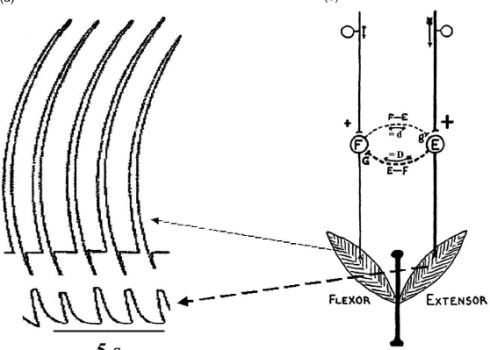
Thomas Graham Brown is a colorful and largely forgotten figure in the history of neuroscience. He was unknown to me before I encountered a rabbit hole that, as is my wont, I could not resist. Rabbit holes are always surprises and the path that leads to them is a big chunk of the fun. Here is my path to theThomas-Graham-Brown-rabbit-hole: […]
Read More →

As a longtime fan of Dr Lisa Sanders’ New York Times column on diagnosis, I was excited to listen to Every Patient Tells A Story (Random House Audio, 2009). I happily looked forward to an anthology of favorite cases that she had already presented. However, when I started to listen to the Audible book, read by the author, I quickly realized […]
Read More →

I recently read Michael Lewis’s The Undoing Project, a book about the friendship and work of Amos Tversky and Daniel Kahneman. And ever since I have been thinking about one idea of Tversky’s as reported by Lewis: “The secret to doing good research is always to be a little underemployed. You waste years by not being able to waste hours.” Now […]
Read More →

Have you ever found yourself at the grocery store, facing six choices of rice where you wish there were one? Okay, well, obviously I am talking about myself. I can stand in front of four choices of rice or yogurt or ice cream, or whatever the need of the moment is, for minutes, stuck in indecision. Brand A is definitely […]
Read More →
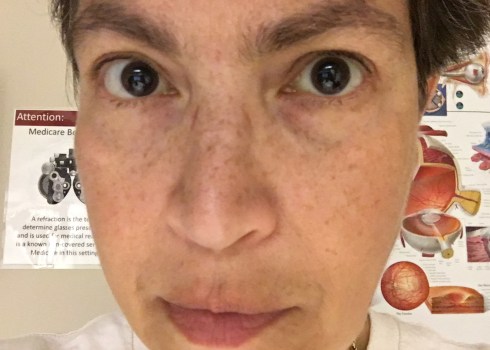
For about 6 months I have been cognizant that my vision has deteriorated. I also am aware that the deterioration is concentrated in my left eye. I have run through my ritual often: close my left eye and not much changes. Then close my right eye and everything is blurry, multiple images water colored on top of each other. With […]
Read More →

I continue to be wowed by NeuroMOOC students so much so that I have changed both my teaching goals and the actions that I take to achieve those goals. This is not a new sentiment as I have written previously about several NeuroMOOCers in the past: Sabeen Mahmud, Anish Garikipati, Francisca Martínez Traub, Diana Keat, and Felipe Sales Nogueira Anorim Canedo. Yet, I […]
Read More →

Emmanuel Carrere said, “To write a book, you’ve got to be persuaded that you’re the only person who could write it.” A corollary to that is that the book that you are writing does not exist already because you are not only the only person alive but the only person for all time. A tall order that is slightly mitigated […]
Read More →


 The brain is sooooo cool!